Not all Moths Fly at Night!

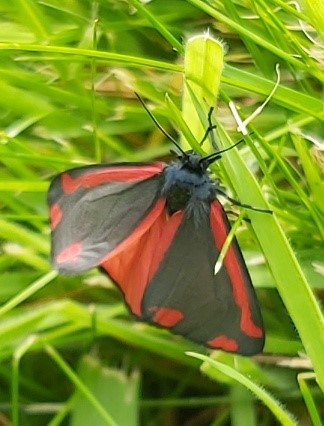
That’s right, many species of moths fly in the day, often in bright sunlight just as butterflies do. Probably the most familiar day flying moth to people is the Cinnabar. This smallish black and red moth is often seen in gardens. It lays its eggs on Ragwort plants and the “very hungry” black and yellow striped caterpillars do a fine job of keeping it in check. You can spot the plants later in the summer that have the caterpillars on, because they can be completely defoliated!

A fairly recent arrival to Leicestershire is the striking Scarlet Tiger moth and you have a good chance of seeing this beautiful moth flying in late afternoon and early evening sunshine, particularly in June. I have a thriving colony in my garden, but I am getting ahead of myself.

The story begins on a pleasant June evening in 2019 having a beer in the garden with a friend when a brightly coloured (we assumed butterfly) flew swiftly over our heads, that we couldn’t recognise. You could certainly be forgiven for thinking it must be a butterfly such as a Red Admiral, if you aren’t aware that it exists in our area.

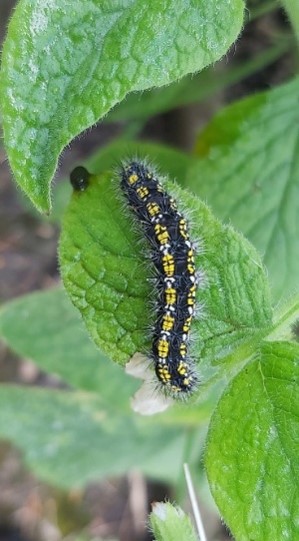
But the next year I noted hairy, black and yellow caterpillars, feeding on the Comfrey plants in my garden in the spring. With the help of an online app I identified these as Scarlet Tiger caterpillars, and the penny dropped as to what we had seen the year before, which was probably an egg laden female searching for new areas.

My moth books (which are 25 years old) state that this species is found only in the south west of England, but I knew a few others had been seen in south Leicestershire recently.

In June 2020 we were treated to the first adults, some of which even adorned us as jewellery whist sitting in the garden………………………..

Since then, they have bred every year with numbers building incrementally until 2025, when they dropped a little; it will be interesting to see what 2026 brings?

If anyone notices adult or caterpillars of Scarlet Tiger this year, I’d be interested to know your address, the date and a rough count of numbers seen, so I can chart the spread of this species locally. Email me on   wrig361@gmail.com

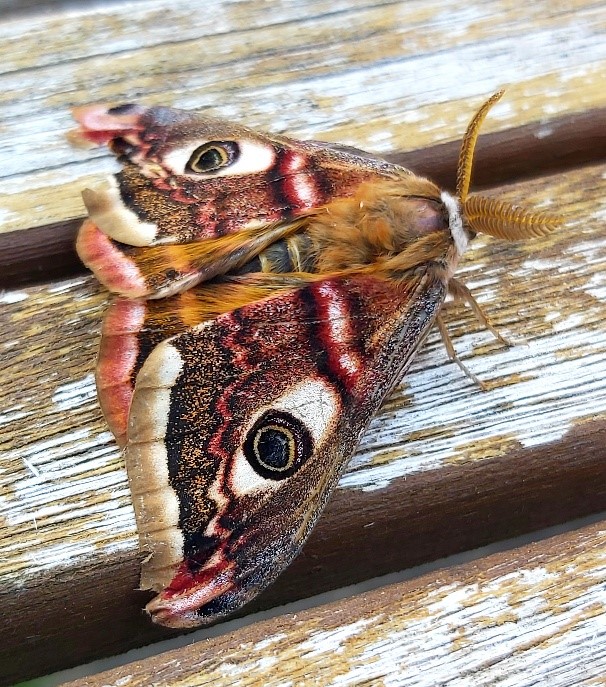
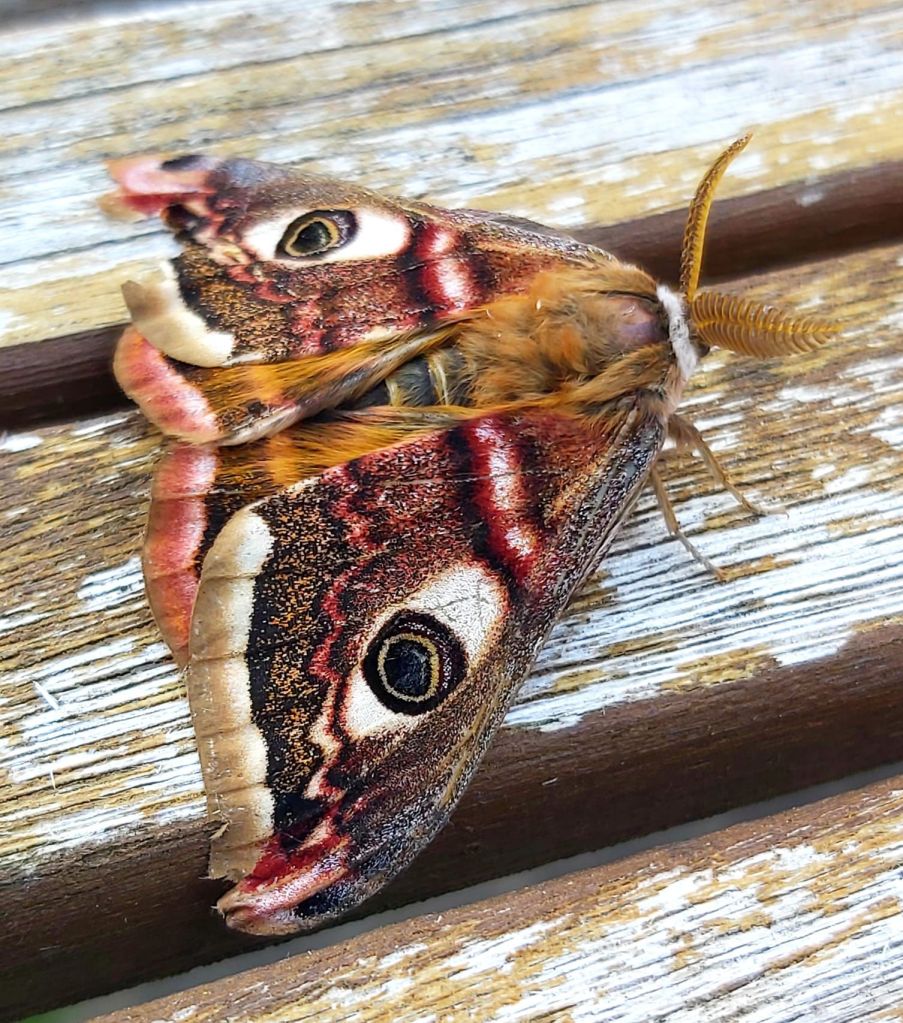
Other day flying moths are, I must admit harder to see. But this year I had the joy of seeing my first adult Emperor moth (and not one, but two!).

Despite being quite widespread across the country, the adults are rarely seen. The females fly very little, but give off a strong scent that attracts males from some distance away. It is these searching males that occasionally get seen. The development of synthetic pheromone lures in the last few years, has meant seeing these has become more possible.

On the 8th of April, after an unsuccessful search for them in the Soar valley on a unseasonable hot day, I returned home and decided to hang the lure on my washing line, whilst I had a much needed cup of tea.

And yo, within 10 minutes this male had approached and ultimately landed on the lure!

This was repeated again on the 25th April, with a different male appearing in my garden. After that I haven’t used the lure again, not wanting to disturb any males again in my vicinity this year.

Article by Thornton Resident – Dave Wright May 2026

Thornton Nature Notes

Summer visitors arrive as Winter birds depart.


Cool breezy weather in early March encouraged birds to linger and migration seemed to be on hold.

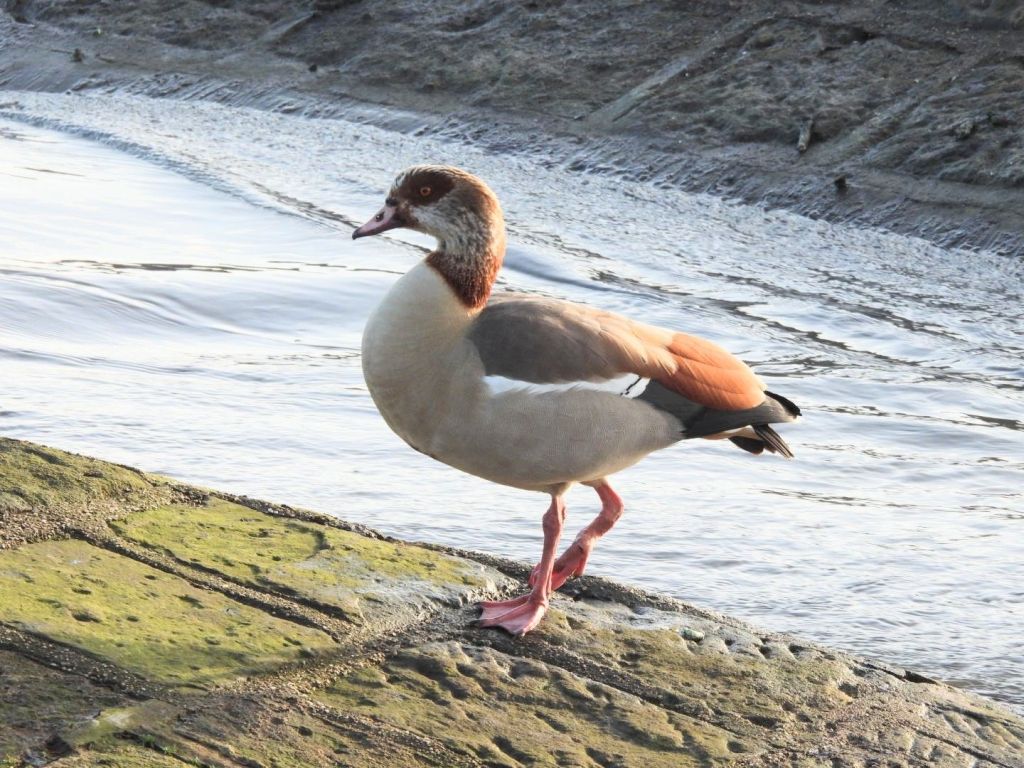
A single Egyptian Goose was at the out flow on the 11th and two Ravens were fly overs.

On the 13th 120 Starlings were heading east and eight Snipe were at the Top End.


Two Kingfishers were chasing each other on the 14th and photos from a nearby private site confirmed mating.

Warm and sunny weather on March 18th had Brimstone and Peacock on the wing and a Great Spotted Woodpecker was drumming from the Church yard.

Noctule and Pipistrelle bats were also out at dusk.


On the 19th good numbers of Smooth Newts were active in the garden pond and the Wigeon count on the reservoir reached 61.


The final Webs count took place on March 21st and totals included 75 Mallard, 44 Tufted Duck, 35 Coot,25 Great Crested Grebe and 22 Moorhen. Also on this date 9 Buzzards, 4 Skylarks and my first Holly Blue of the year were noted.


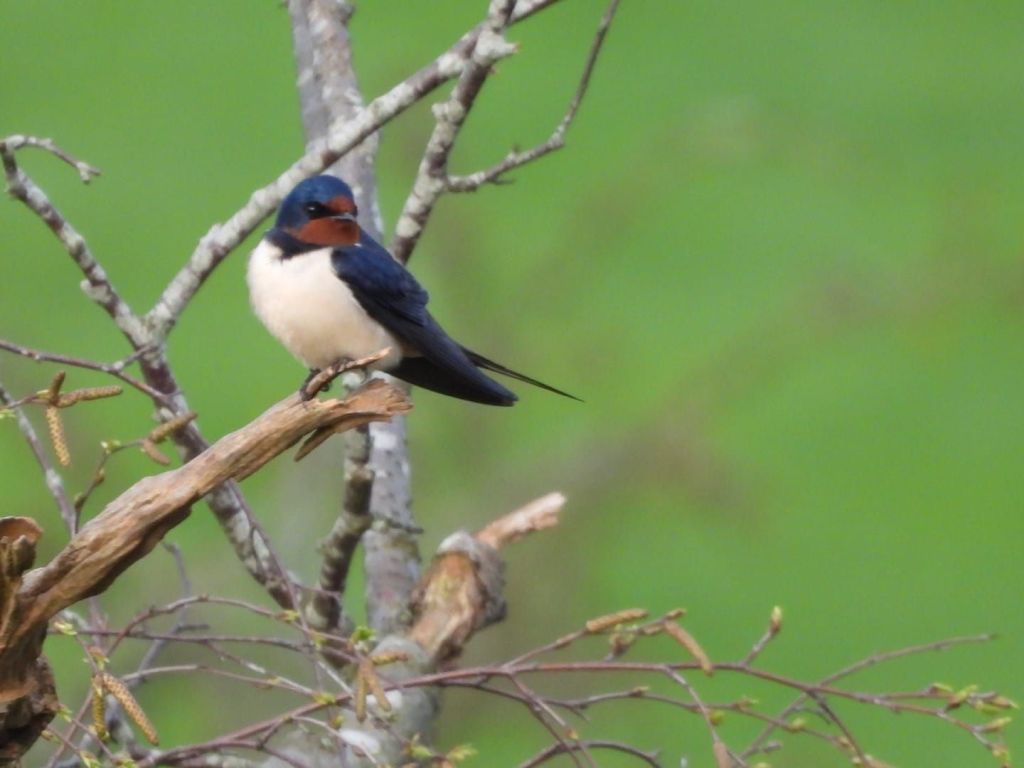
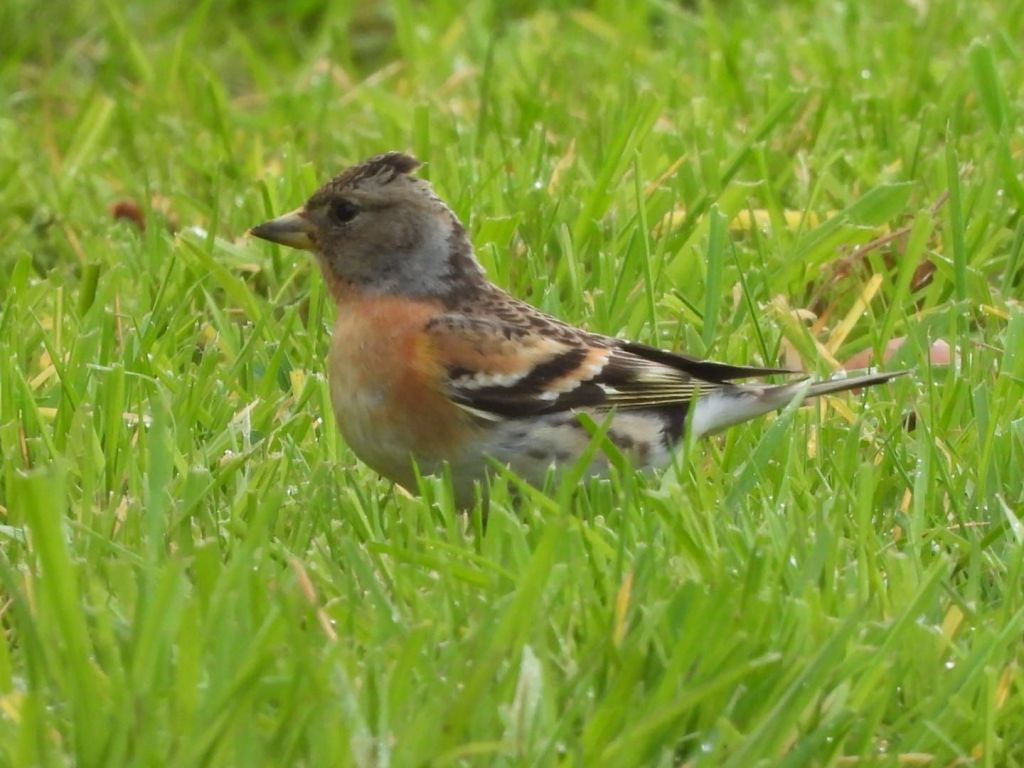
March 25th observations revealed that seasonal change overs were taking place. A female Brambling was feeding up before heading back north, and three male Swallows were new in from their wintering grounds at the Western Cape of South Africa.

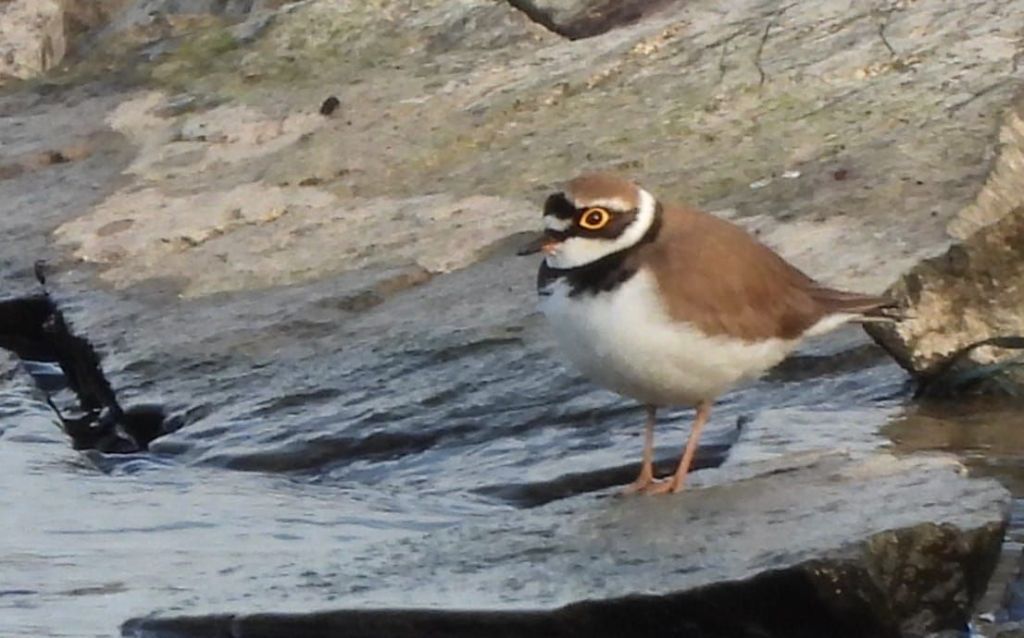
On the following day a Little Ringed Plover was on the dam and more recently there has been a probable pair.

As March drew to a close Buzzards, Red Kites, Peregrines Sparrowhawks and Kestrel were all recorded, and many were displaying.

My first Comma was sunning itself on the month’s final day.


April has commenced with typically changeable weather and some very warm days.

On the first a male Goosander was heading north, and on the second a Tortoiseshell butterfly was in the garden.


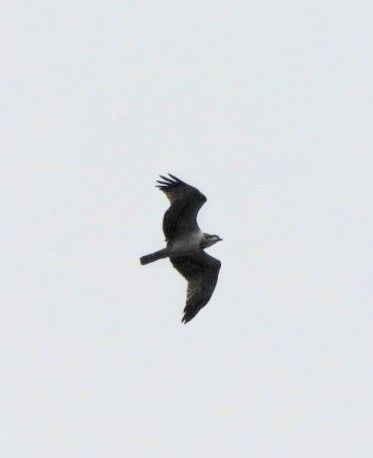
On April 5th Sandmartin numbers had increased to 130 but the highlight was an Osprey that flew west.

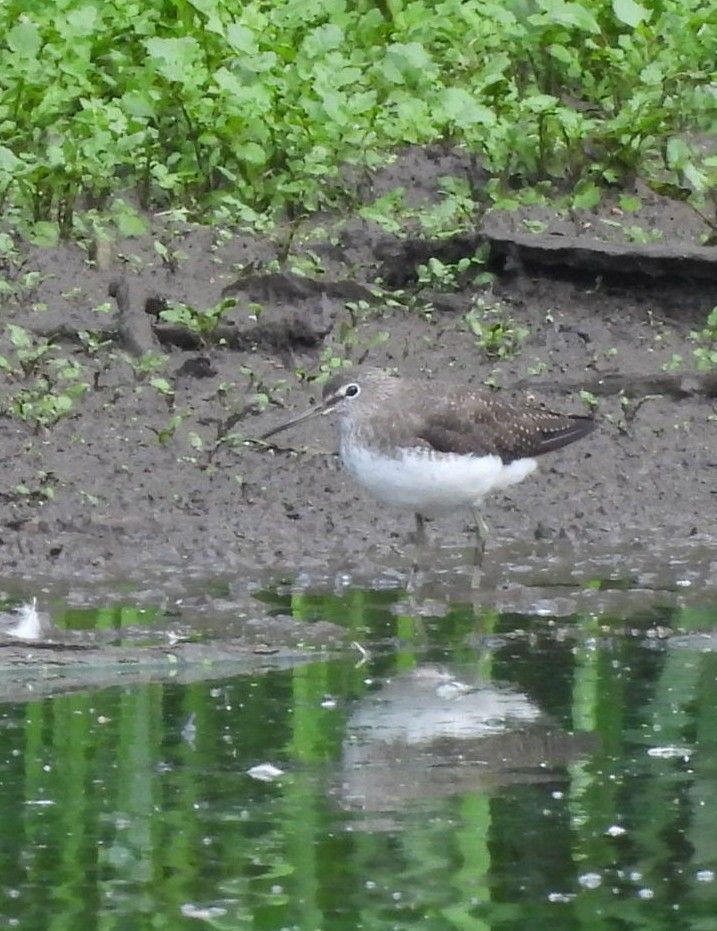
On the following day three Common Sandpipers were on the dam, three Red Kite were circling and Linnet was added to the year list.

Orange Tip was an addition to the butterfly list.


The thrill of April 8th was a stunning male Emperor Moth found by Dave.

Copyright Dave Wright

This species despite being common and well distributed is rarely seen. This may be due to a short flight season, so the glorious weather was an important factor.


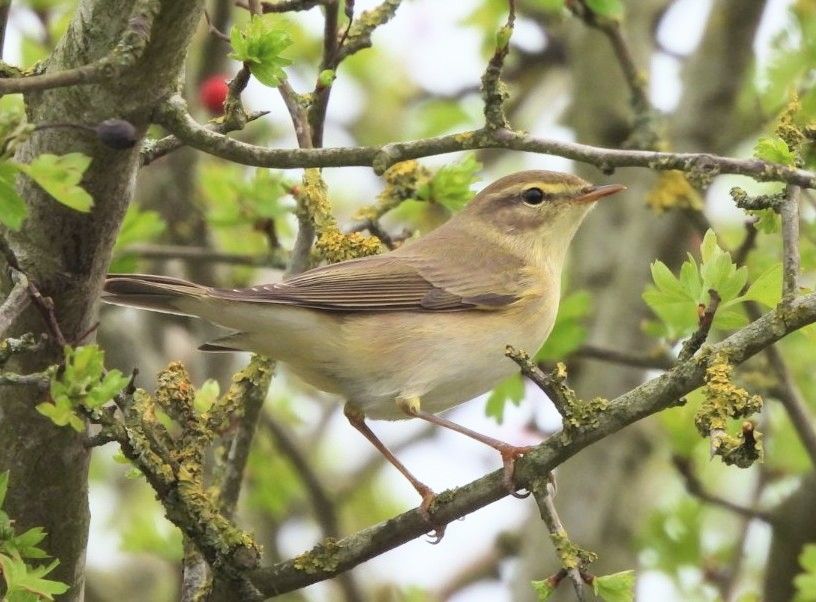
As I write summer visitors are arriving with House Martin and Willow Warbler new in. The dawn chorus is in full swing as bird species commence their breeding cycle.

Avoiding disturbance of hidden nests is much appreciated at this time.


Andy Smith 11/04/2026

See the separate Nature Notes page for more information.

Fund Raising weekend in Thornton

Last weekend, 6th and 7th of July, was a busy one in the village with two fund raising events.

Quiz night with cream teas and Prosecco took place on Saturday, raising £480 towards the running costs and upkeep of Thornton Community Centre.

Sunday afternoon saw the return of the biennial Thornton Open Gardens raising funds for the upkeep of St Peter’s Church.

Despite the stormy weather forecast and the couple of heavy showers that materialised, this year’s Thornton Open Gardens proved popular once again. 

On the afternoon of Sunday 7th July, 302 visitors came to enjoy our 13 contrasting open gardens.

As well as the gardens themselves to admire, there was a variety of refreshments on sale, a plant sale, a quiz and a fun animal hunt.  

Locals, friends and acquaintances rubbed shoulders with visitors from further afield, many of them regularly seeking out summer open gardens events all over the Midlands. 

Everyone seemed to enjoy all that Thornton had to offer.  The event made an impressive profit of £1697 which is to go towards the maintenance of St Peter’s Church.

Friends of St Peter’s would like to thank all those who opened their gardens, served refreshments, directed the car parking, donated and sold plants and manned the church. 

Our thanks, too, to The Brickies (Bricklayers Arms), the Shop and Thornton Nurseries  for selling programmes. Also, to The Garden Design Company, who generously supported the event, which was organised by Friends of St Peter’s.